Tackling the Challenges of Labelling Round Containers
Labelling round containers may sound simple, but it comes with a unique set of challenges. From the type of label to the precision of the labelling machine, every detail can affect the outcome. Let’s take a closer look at the factors that complicate this seemingly straightforward process and how the right equipment can help you navigate these obstacles.
The Role of Label Type in Application
The type of label you choose plays a major role in the success of your labelling process. Labels can be clear, opaque, thick, thin, or even textured—each requiring specific handling. Round containers, in particular, demand a high level of precision due to the curved surface, where even minor misalignment can lead to wrinkling, bubbling, or uneven application.
For example:
- Clear labels: These require exceptional accuracy, as any air bubbles or imperfections are highly visible.
- Thicker labels: They may struggle to conform smoothly to the container’s curvature, needing careful application to avoid creases or lifting.
Selecting the right label material and thickness is critical to ensuring a smooth, professional finish.
Machine Precision: The Key to Accurate Labelling
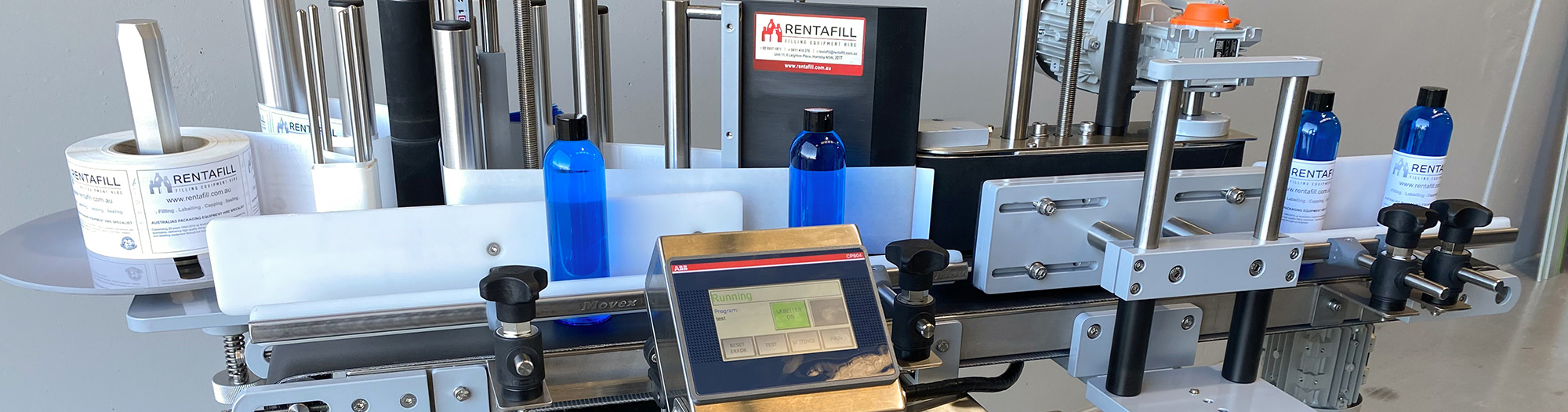
Labelling machines designed for round containers must be finely tuned for precision. The challenge lies in the fact that any deviation in the size or shape of the container can throw off the accuracy of the label application. When working with round containers, the machine must ensure that the label aligns perfectly with the container’s surface.
This becomes even more complicated when dealing with:
- Label size vs. container size: Larger labels applied to small containers leave little margin for error. Even the slightest miscalculation can result in overlapping, misalignment, or label stretching.
- High-speed production lines: As speed increases, so does the difficulty of maintaining consistent precision. The faster the machine operates, the more critical it becomes to balance speed with accuracy.
Inaccurate labelling can be costly—not only in terms of wasted labels but also in the potential for damaging your product’s image on the shelf.
The Challenge of Irregularly Shaped Containers
While perfectly round containers present their own hurdles, the challenges intensify when dealing with containers that are not perfectly symmetrical. These slight imperfections can cause significant disruptions in the labelling process.
Even when a label is perfectly die-cut, the accuracy of the machine can only go so far. If the container isn’t perfectly shaped, the label may apply unevenly, leading to visual and functional imperfections. For containers with slight variations in roundness, even top-tier labelling machines face limitations. In such cases, the container itself becomes the limiting factor.
Boundary Limits: How Container Size Influences Accuracy
Label application is also heavily influenced by the size ratio between the label and the container. When the label is large relative to the container, it requires an even higher degree of machine accuracy to apply correctly. A machine that’s off by even a millimeter can result in noticeable errors—crooked labels, air pockets, or partial overlaps.
Smaller containers with large labels are especially vulnerable to these issues. In these cases, the machine must carefully control both the label’s placement and its tension during application to prevent misalignment.
What’s the Solution?
Overcoming the challenges of labelling round containers requires both the right equipment and smart label design. Here are a few strategies to ensure a smooth process:
- Design with room for error: One simple but effective way to minimize labelling issues is to round the corners of your label. Sharp edges are more prone to lifting or misalignment, so rounding them helps reduce this risk.
- Increase the gap on full-wrap labels: If you’re using a full-wrap label, leaving a larger gap between the ends can prevent alignment issues. This extra space removes the pressure of needing the label to meet perfectly at the seam, giving you more flexibility.
- Account for vertical movement: When designing your label, ensure there’s some leeway between the label height and the labelled area on the container. This will allow the label to move slightly up or down without becoming misaligned, helping you avoid placement errors.
Equally important is working closely with your label manufacturer. Make sure they fully understand both your container and the type of label you intend to use. If they’re not providing that level of expertise, it might be time to seek out a more knowledgeable supplier. Look for recommendations within the industry from companies who have labelled similar containers and can suggest trusted label suppliers.
Labelling round containers requires a delicate balance of precision, the right label type, and a machine that can meet your production demands. When you get it right, the results speak for themselves: clean, professional labels that enhance your product’s presentation and branding.
With the right planning and the right machine, these complications can be avoided.
For more information on the best labelling solution for your business, contact the Rentafill team today!