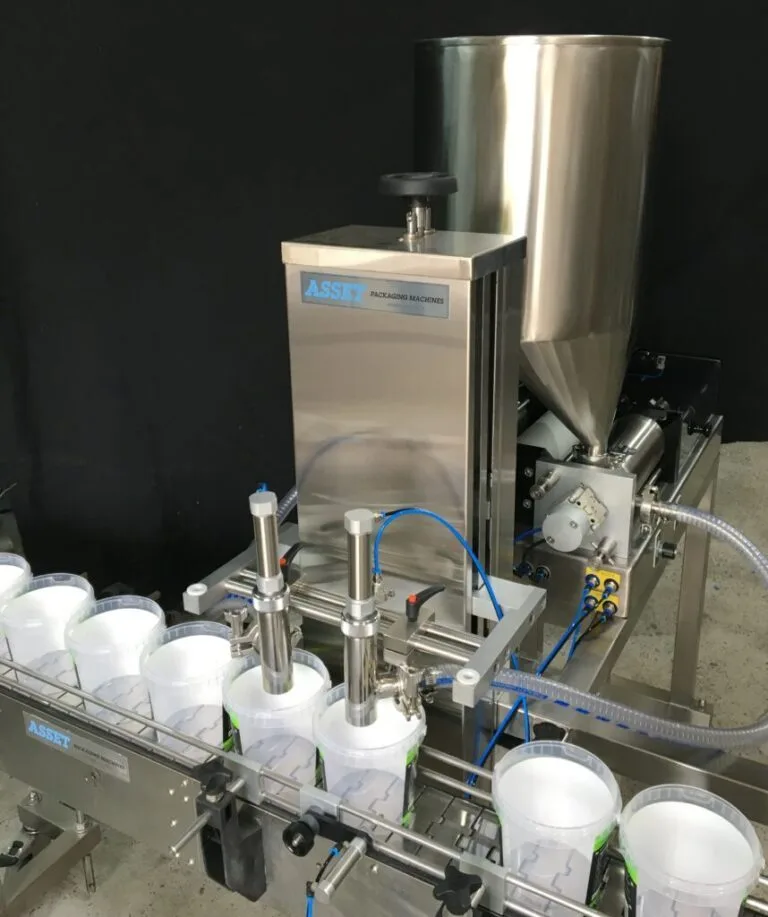
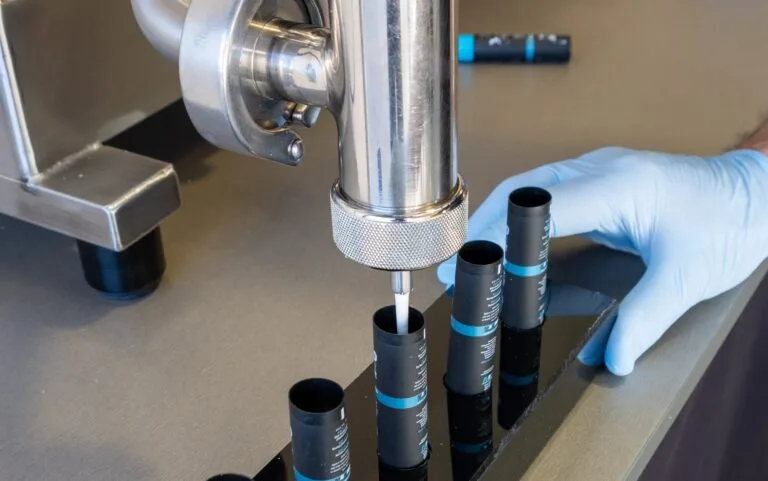
If you run an automatic pneumatic filler, you probably know the air whisker sensor well, and not in a good way. Around three years ago, we developed the ICP Sensor Box to replace the Kuhnke pneumatic whisker valves used on many Asset Packaging and ICP filling lines, after years of dealing with the same problems over and over in our own hire fleet.
Here’s why we built it, how it works, and how it can keep your filling line running.
The Problem With Air Whisker Sensors
A pneumatic whisker valve detects containers by physical contact: a thin whisker is pushed aside by the container, which switches an air signal to start the fill cycle. It’s a simple idea, but in day-to-day production it causes constant headaches:
They break
The whisker is a fragile moving part that’s knocked by every container. Bent and snapped whiskers are a regular cause of stoppages.
They clog
Because they run on air, whisker valves are easily blocked by moisture, dirt or product, causing missed signals or false starts.
They’re hard to replace
Replacement whisker valves can be difficult to source, and costly when you can find them. Meanwhile, the line sits idle.
They false-trigger
A brief knock from a passing container can be enough to start a fill cycle, leading to fills with no container in place, and spills.
After years of replacing broken and blocked whiskers on our own machines, we decided there had to be a better way.
What the ICP Sensor Box Does
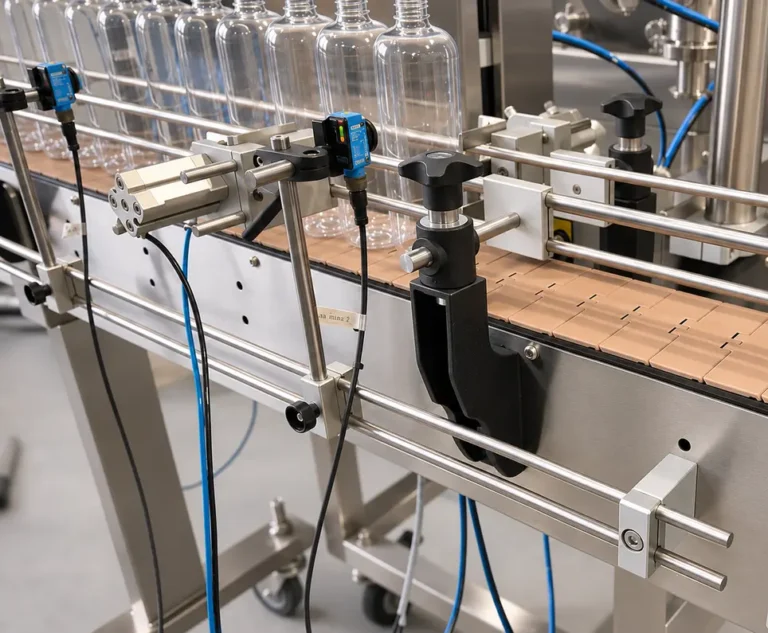
The ICP Sensor Box replaces the air whisker with non-contact electronic sensors. Nothing touches the containers, so there’s nothing to bend, snap or clog. The box detects the containers electronically and then sends the same pneumatic start signal your filler already uses, so the filler’s existing pneumatic fill controls stay as they are.
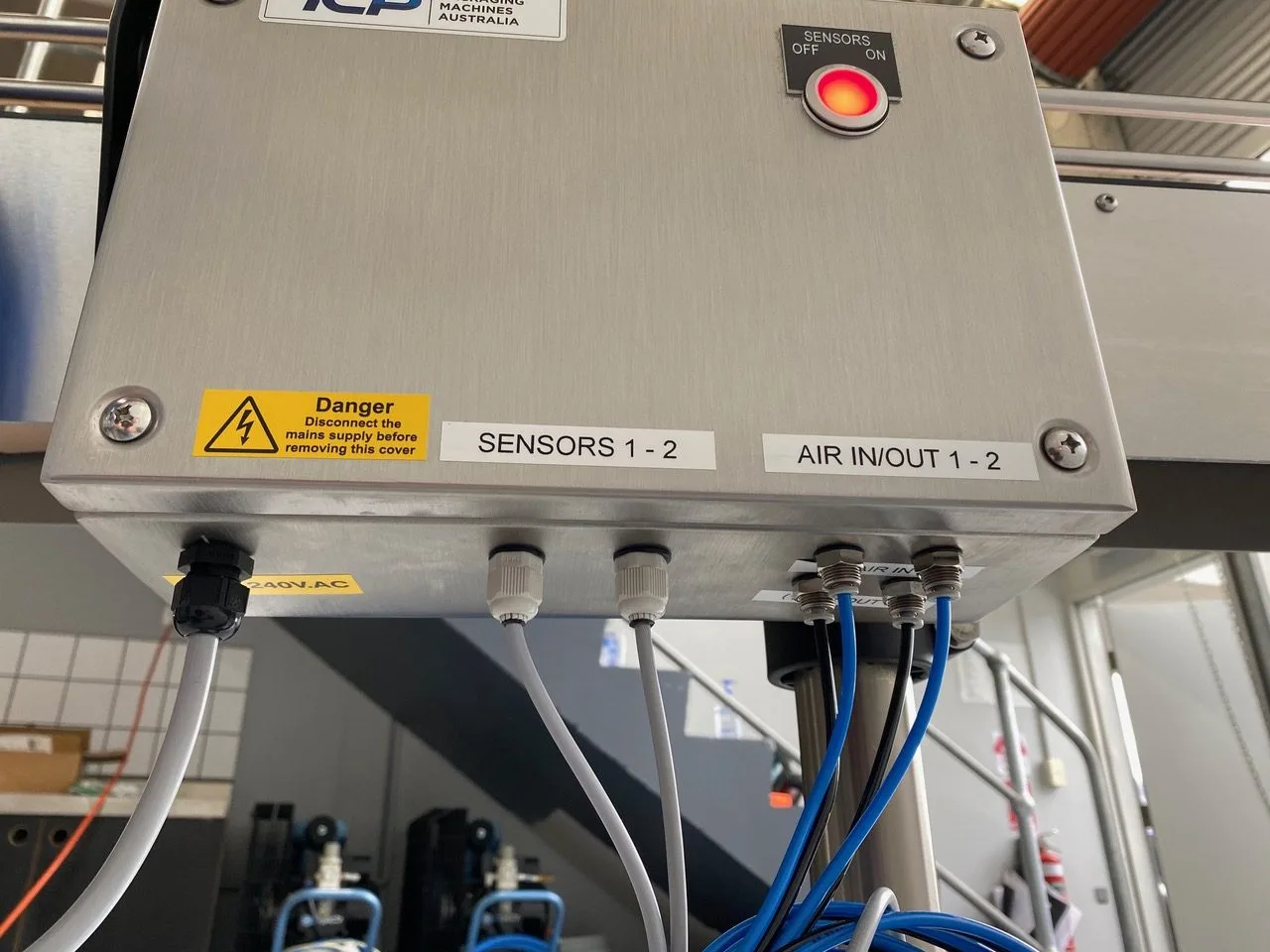
- Non-contact detection – no whisker to break or clog
- Programmable timing – set delays to suit your containers and conveyor speed
- Pneumatic output – a solenoid valve sends the start signal your filler already uses
- Industry-standard M12 sensor connections – use sensors from many different manufacturers
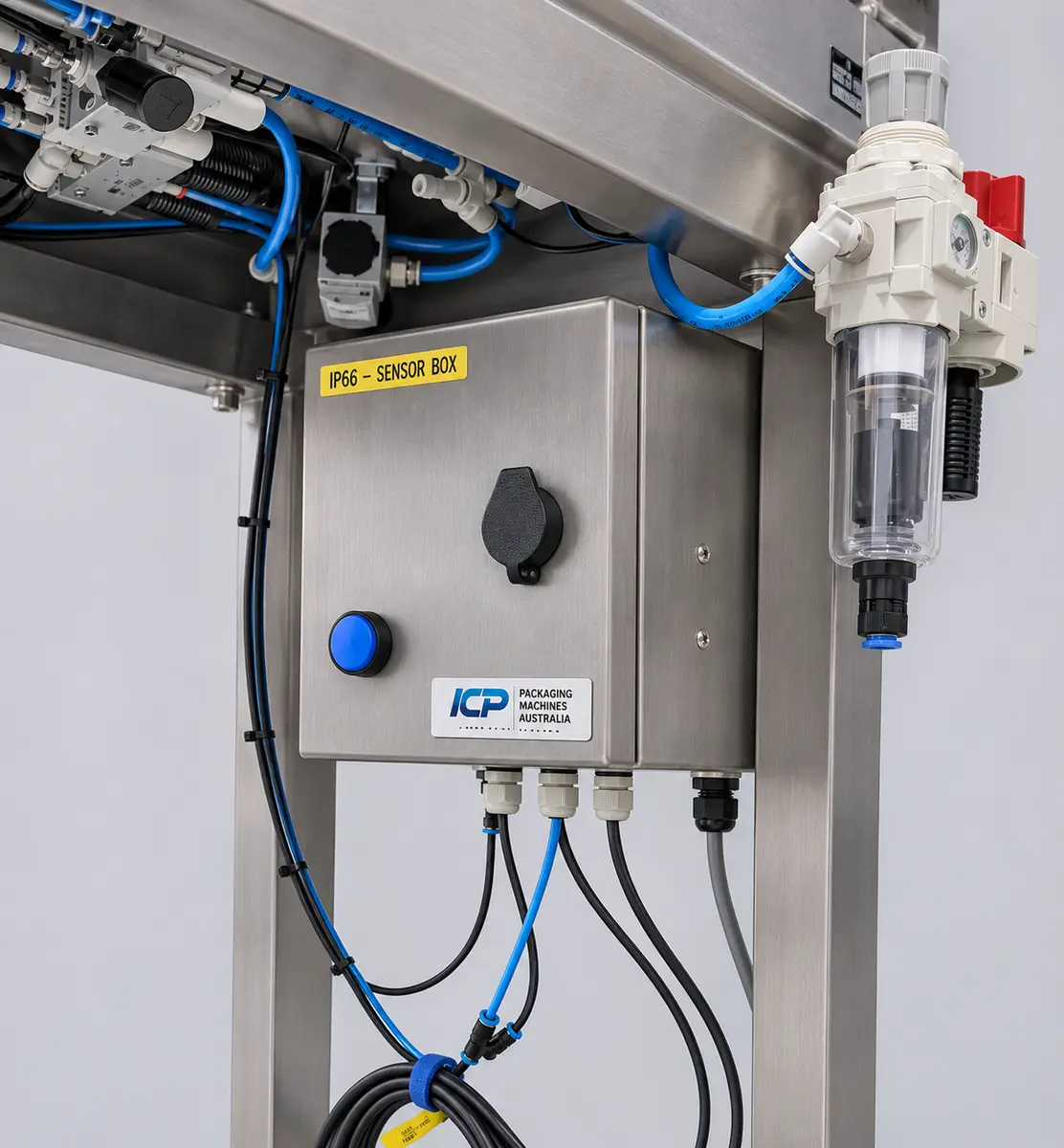
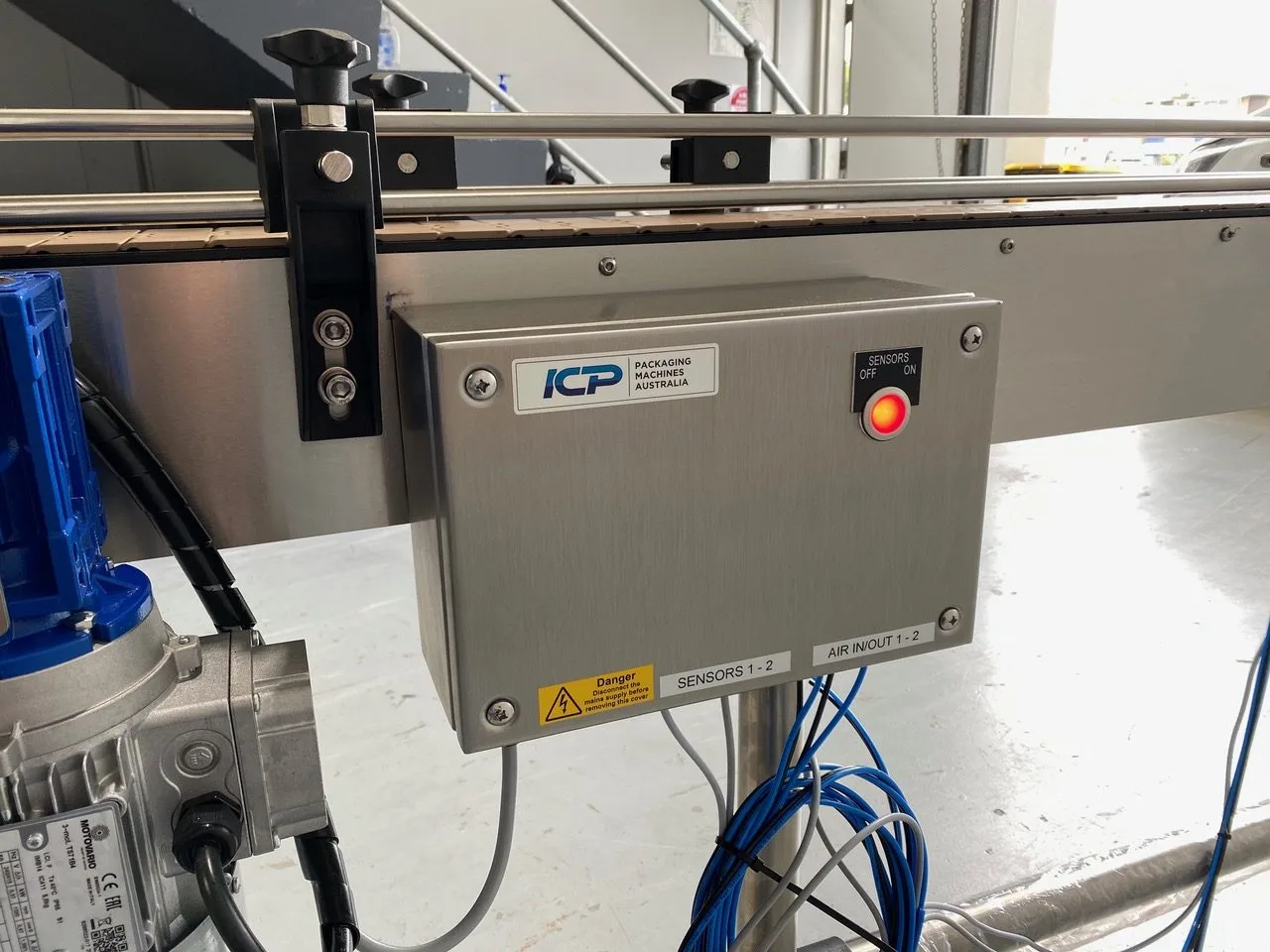
Use Sensors From Almost Any Manufacturer
This was one of the most important design goals. The ICP Sensor Box uses industry-standard M12 connections, so you can connect the majority of sensors from many different manufacturers, not just one brand.
That matters most when something goes wrong. If a sensor fails, or your usual supplier is out of stock, you can fit an alternative with a compatible M12 pinout, supply voltage and output type, often from a local electrical or automation supplier, and get production running again the same day instead of waiting weeks for a proprietary part.
It also means you can choose the right sensor for your containers, such as a clear-object sensor for transparent bottles and jars.
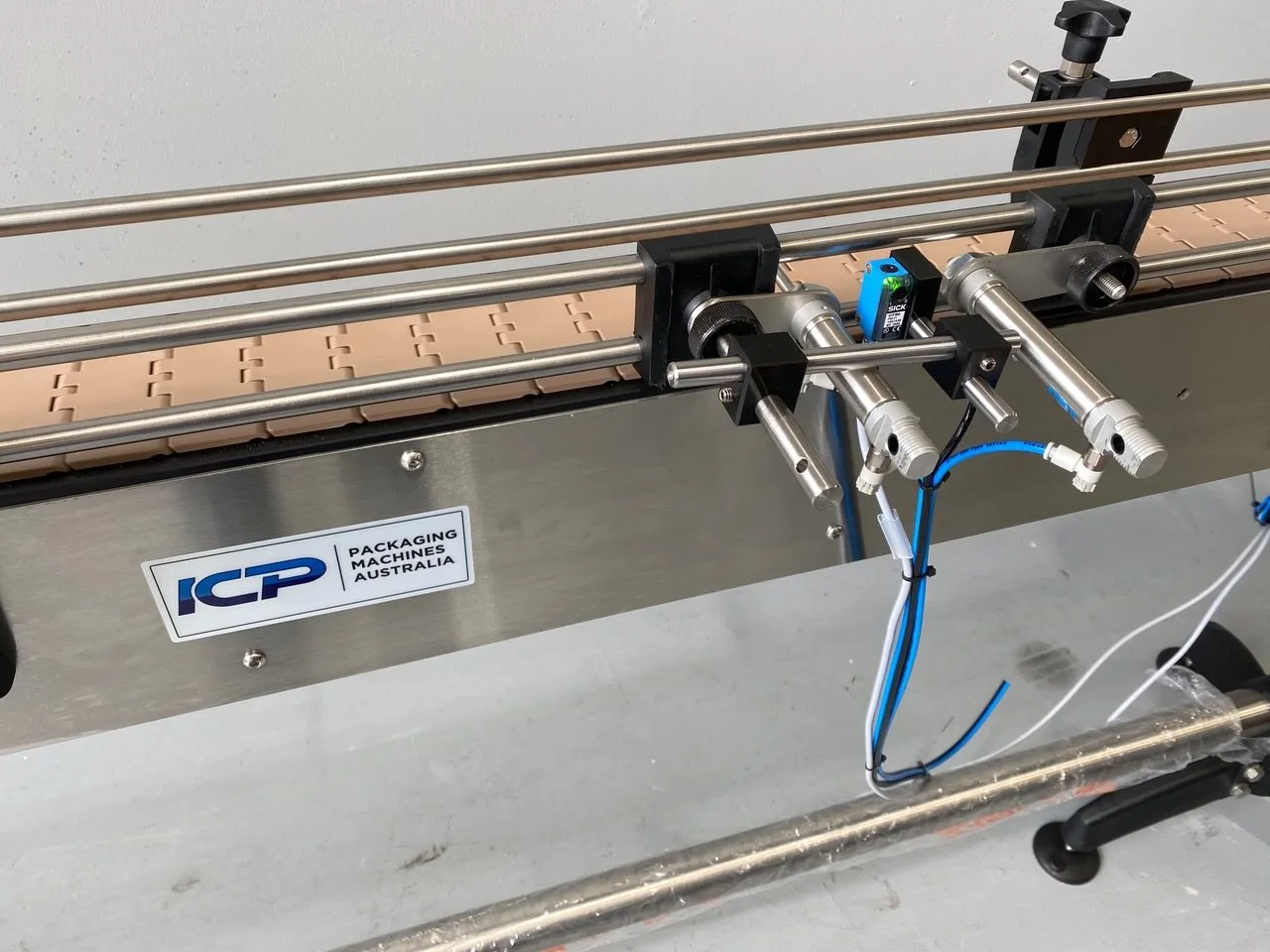
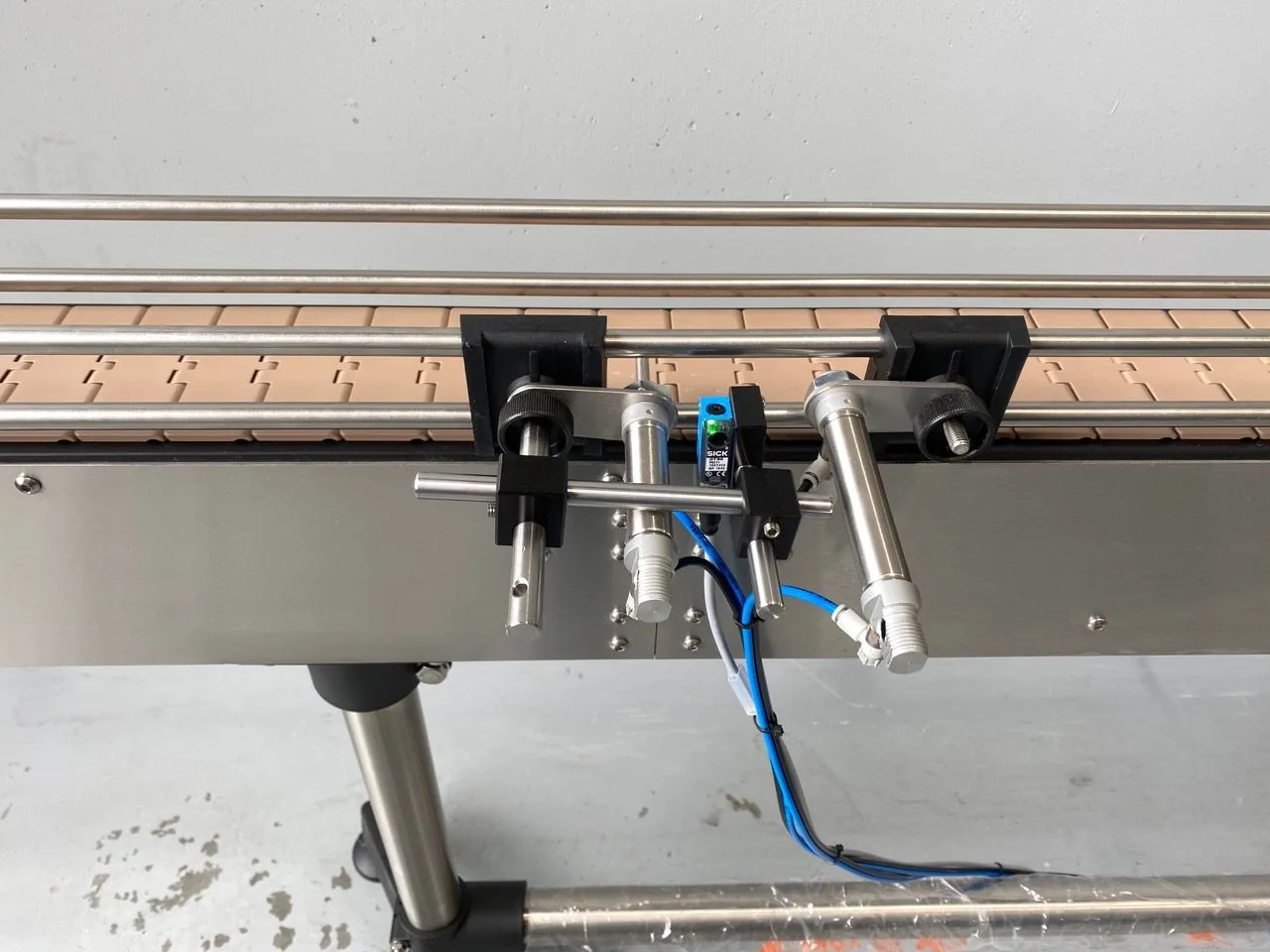
No Bottle, No Fill (NBNF) With Two Sensors
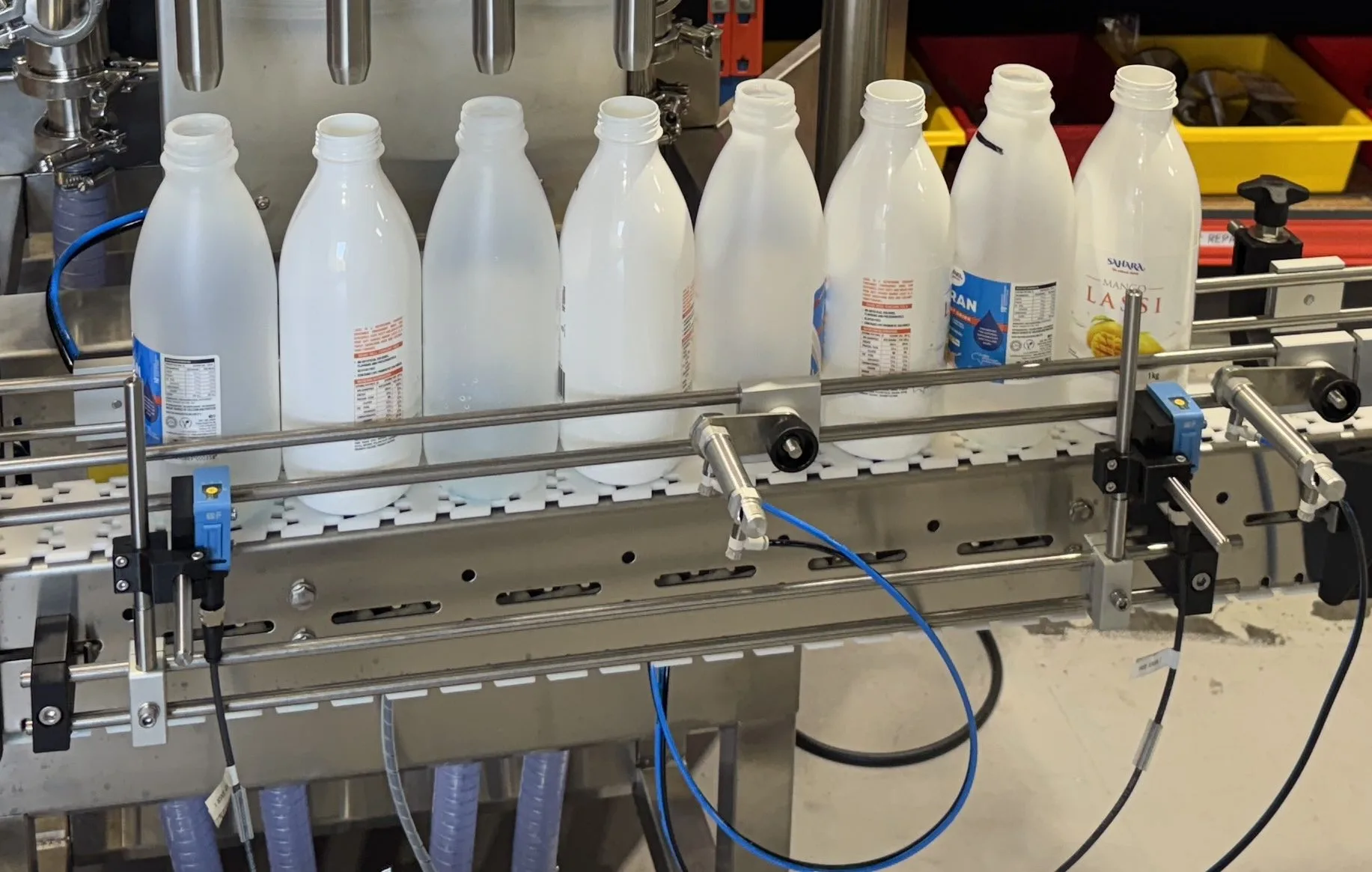
On a multi-head filler, the ICP Sensor Box can run two sensors as a No Bottle, No Fill (NBNF) system, so the machine only fills when containers are actually in place under every nozzle:
Front sensor
Detects the lead container held at the stop gate.
Queue sensor
Positioned further back along the conveyor, it detects containers once the queue has backed up under all the filling nozzles.
Time delay
The box only starts a fill when the sensors see containers in position for a set time, for example one second. A container simply passing a sensor clears it before the delay runs out, so it can’t trigger a fill.
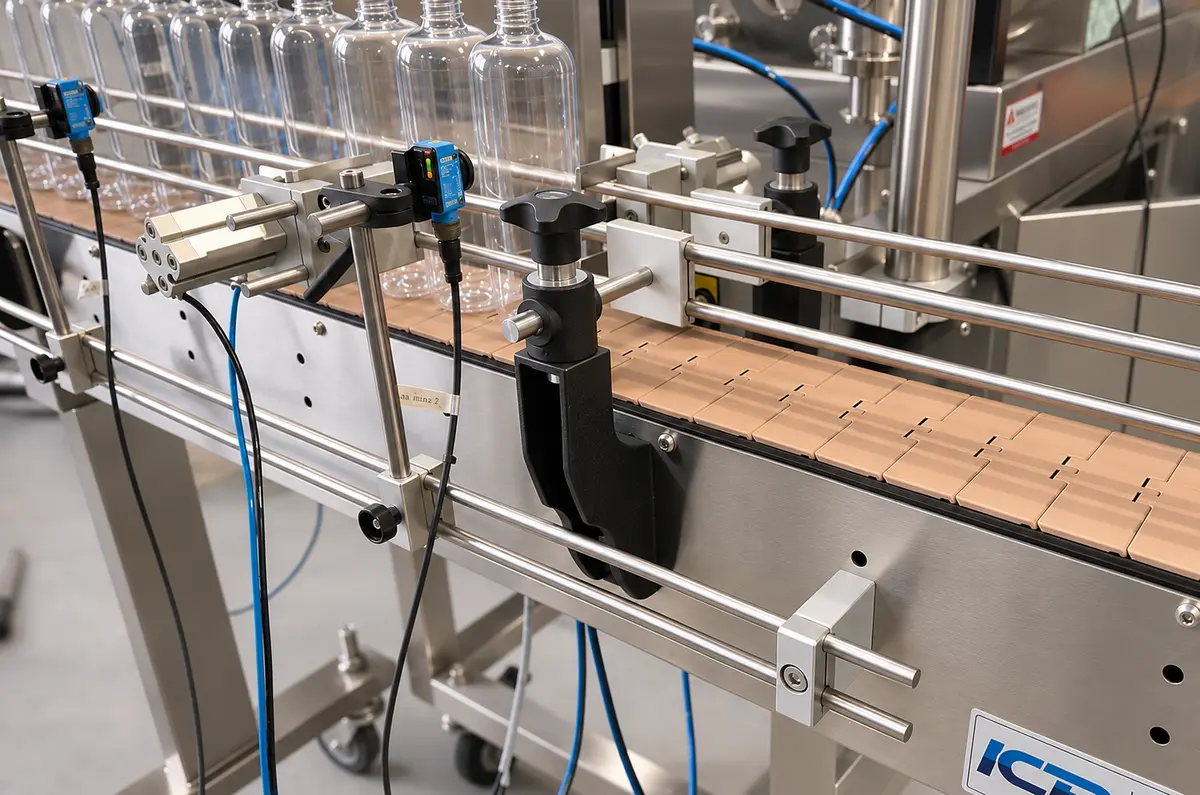
Once the timing requirement is met, the box switches a solenoid valve that sends the pneumatic start signal to the filler. The result: no fills into empty space, no false starts from passing containers, and far fewer spills.
Retrofit Your Asset or ICP Filling Line
The ICP Sensor Box is designed for automatic pneumatic fillers that accept an external pneumatic start signal, including many Asset Packaging fillers such as the AV-3 Twin, AV-5 and AMF 4 cylinder filler, and ICP fillers such as the ICP-M2 and ICP-M5.
Every line is a little different, so we customise the box to suit your machine, containers and conveyor layout, including the right sensors, mounts and accessories.
To get a sensor box set up for your line, send us:
- Your filler’s make and model
- Photos of your current whisker sensors and conveyor mounts
- The containers you run, especially if they’re clear or unusual shapes
- Whether you want single-sensor or No Bottle, No Fill operation
We’ll confirm the configuration and the parts you need.
We also supply finger gates, flat gates and guide rail clamps to suit ICP conveyors.
Frequently Asked Questions
Common questions about the ICP Sensor Box.
What is the ICP Sensor Box?
The ICP Sensor Box replaces air whisker sensors, such as Kuhnke pneumatic whisker valves, on automatic pneumatic filling machines. It uses non-contact electronic sensors to detect containers and sends the pneumatic start signal the filler already uses.
Why replace an air whisker sensor?
Air whisker sensors rely on physical contact, so the whiskers break, the air valves clog, and a brief knock from a passing container can trigger a false fill. Replacements can also be hard to source and costly.
Which sensors can I use with the ICP Sensor Box?
The ICP Sensor Box uses industry-standard M12 connections, so you can use the majority of sensors from many different manufacturers, as long as the pinout, supply voltage and output type are compatible.
What is No Bottle, No Fill?
No Bottle, No Fill (NBNF) uses two sensors to confirm containers are in position under all the nozzles before the filler starts. A programmable time delay stops a container that is simply passing a sensor from triggering a fill.
Will the ICP Sensor Box fit my Asset Packaging filler?
It is designed for automatic pneumatic fillers that accept an external pneumatic start signal, including many Asset Packaging fillers. Send Rentafill your make, model and photos of your current setup to confirm.
Done With Broken Whiskers?
Talk to the people who designed the ICP Sensor Box. We’ll customise it to suit your Asset filling line or ICP packaging line.