
“How many bottles a minute will it do?”
It’s the question we’re asked more than any other, often in a one-line email. Our honest answer is always the same: we don’t know. Not until your product has been through the machine.
That isn’t us dodging the question. The machine is the one part of the equation we’re not worried about.
The Machine Is the Easy Part
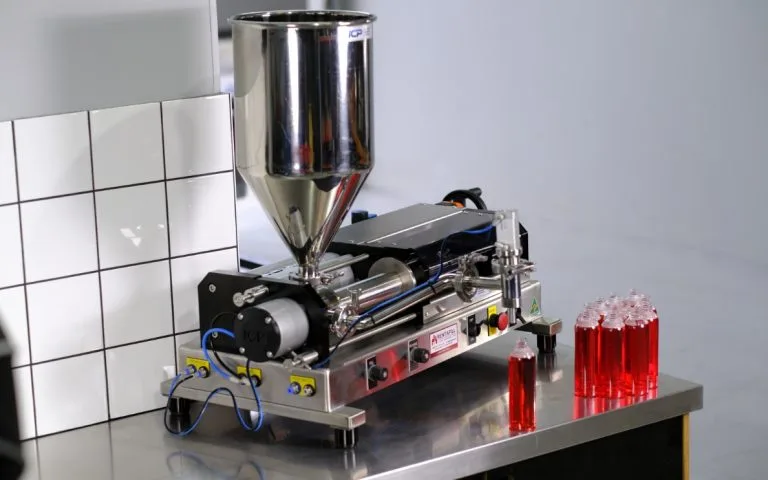
We design and build our ICP fillers to be over-engineered. They’re built for our own hire fleet, so they’re made to be more powerful than the products and containers they fill. An ICP-1 could cycle well over 60 times a minute, but you’d never run it that fast, because your product, your container and your people couldn’t keep up.
So when you ask how fast a filler is, what you’re really asking is how fast your job can be filled. That comes down to five things:
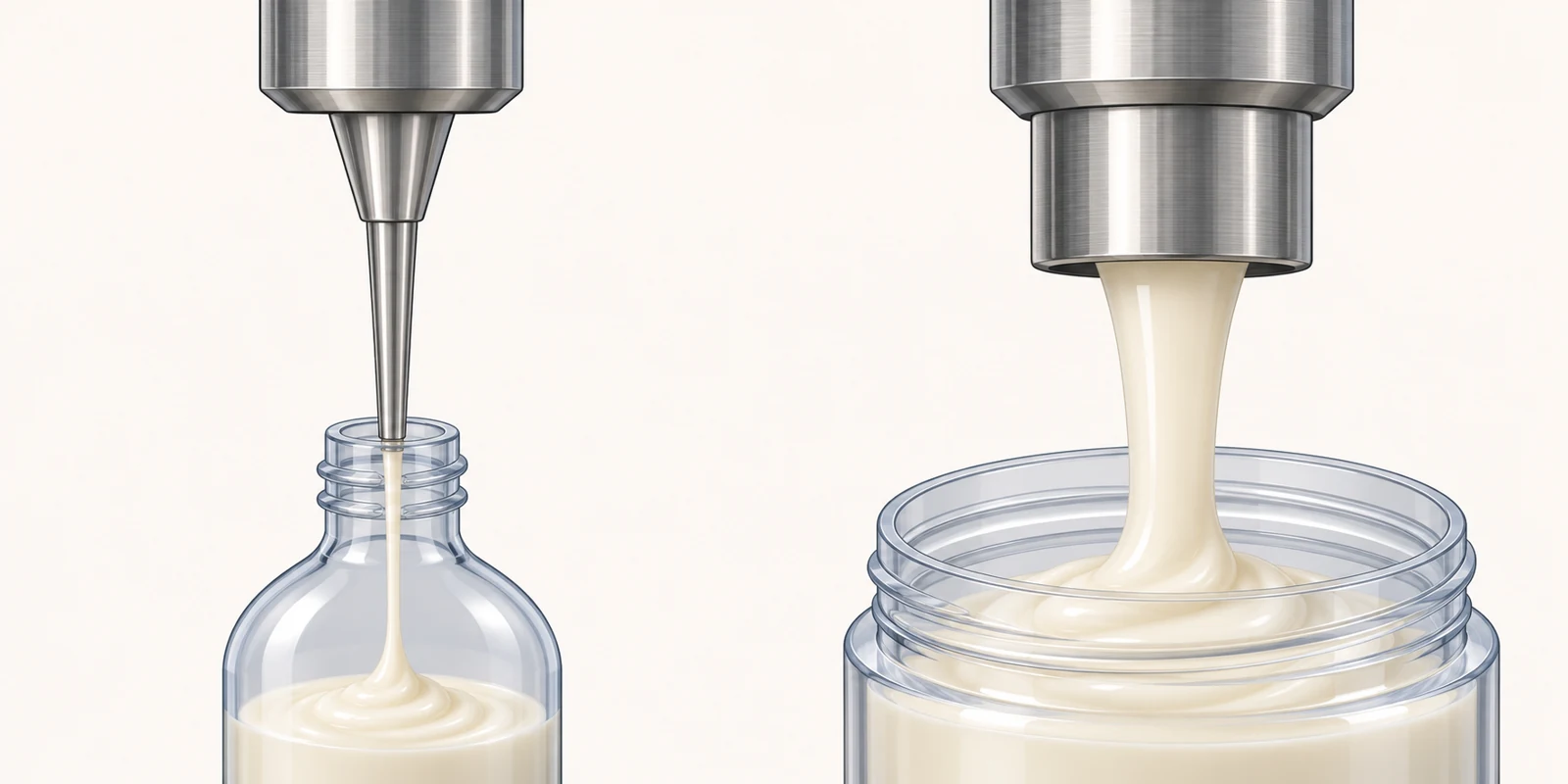
- Your product. Thin liquids flow fast. Thick, foamy or stringy products don’t, and pushing them harder just makes a mess.
- Your container. A narrow neck means a small nozzle. A thick product through a small nozzle is slow, however good the machine is.
- Your environment. Where the product is drawn from, the temperature, the space you have, and what happens before and after the filler.
- Your staff. How many people can you put on production, and how capable are they? A semi-automatic filler is a one-person job, and that person sets the pace. A filling line needs more hands to keep empty containers coming and to cap, label and pack what’s filled.
- Setup and clean-up. Every day starts with setup and ends with cleaning. A 4-head filler has four times the parts to clean as a single head, and that time comes out of your day.
We can’t know any of that from an email. So if someone gives you a firm number without seeing your product and container, they’re guessing. If they guess wrong, you end up with the wrong machine.
Where We See People Go Wrong
Most enquiries land at one of two extremes.
- Too big. Someone asks for a 4-head automatic to fill 3,000 units a day. That’s about 6 a minute. A single-head ICP-1 does it comfortably, with a quarter of the cleaning.
- Too small. Someone wants to hire a machine to fill 3,000 an hour. That’s 50 a minute, all day, which is a job for a custom production line costing millions, not a filling machine.
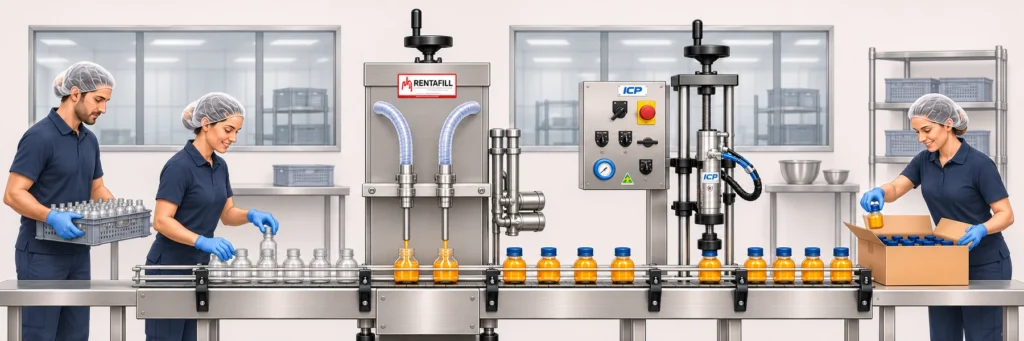
Even at the top end, the filler is rarely the problem. We installed an ICP-M4SA servo filler for a juice producer who needed 50 a minute, and it ran cleanly at 60. The hard part was everything else: getting 60 empty bottles a minute onto the conveyor, then capping, labelling and packing them at the same rate.
What We Can Tell You
If you send us details of your product and container, we can tell you what we’ve seen with similar products and give you a rough idea. But it’s only a guide, because we still won’t know your product, your space or your team the way you do.
What We’d Do in Your Shoes
Hire one. Run your own product, in your own containers, with your own people, and you’ll have a real number instead of someone’s assumption. If the machine turns out too small or bigger than you need, swap it. When you’re ready to buy, you’ll know exactly what you need.
That’s the only honest answer to “how fast is it?”, and it’s the one that stops you buying the wrong machine.
Related Reading
Find Your Real Number
Hire a filling machine and run your own product and containers.