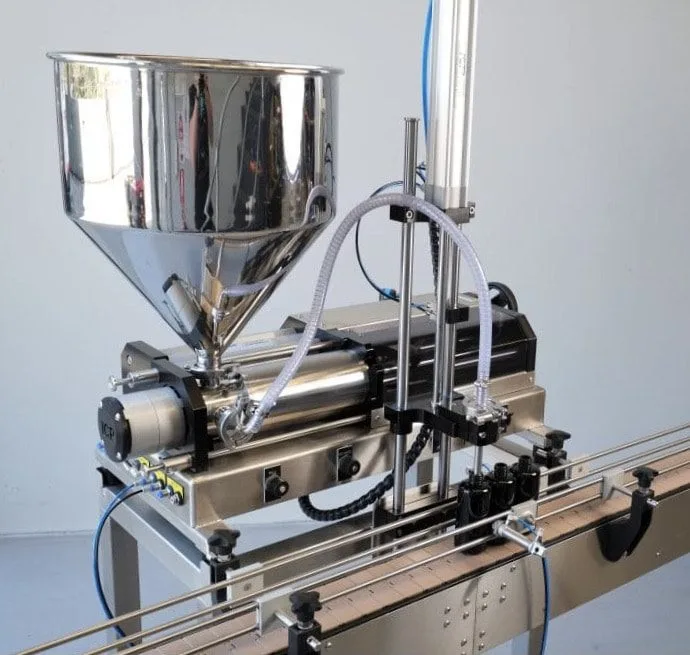
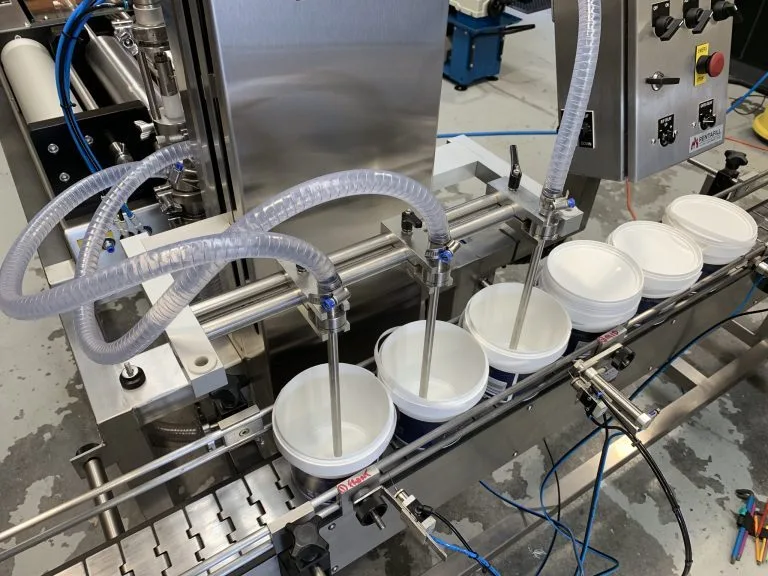
Liquid filling technology keeps moving. Whether you fill food and beverages, cosmetics, chemicals, oils or household products, producers now expect more accuracy, faster changeovers and equipment that is simply easier to live with on the production floor.
Here are the trends we’re seeing from the workshop floor, what they mean for Australian producers, and how ICP machines are built to handle them.
7 trends in liquid filling technology
1Accuracy and repeatability are expected as standard
Small fill inconsistencies cost money: product given away in overfills, rejected units, and customer complaints when a bottle looks short. Producers now expect a filler to hit the same volume shot after shot, whether the product is thin, thick, foamy or fragile.
Accuracy also ties into sustainability. Every millilitre you’re not overfilling is product you can sell.
How ICP machines handle it:
ICP fillers are built for repeatable fills, with positive, measurable volume adjustment. Once a product is dialled in, you can return to the same setting next run without starting from scratch.
2Fast, repeatable changeovers
Most businesses now run several products, sizes and batches through the same machine. The time spent switching between them, and the bottles wasted while you dial in the new setting, has become one of the biggest hidden costs on the floor.
Recipe storage and touchscreens help on large automatic lines. On semi-automatic machines, what matters most is simple, repeatable adjustment that any trained operator can get right.
How ICP machines handle it:
ICP machines are designed for fast, repeatable setup and changeover, rather than relying on outdated slide scales or magnetic reed switches that make adjustments slow and hard to repeat.
3Flexibility over “one big line”
Product ranges keep diversifying: seasonal releases, pilot runs, small batches and frequent formulation changes. That has pushed many producers away from a single large dedicated line toward flexible equipment that can be reconfigured as needs change.
Many businesses are surprised to learn they don’t need a full production line at all. A well-set-up benchtop filler often covers far more output than expected.
How ICP machines handle it:
We’ll recommend what your product actually needs, not just what you think you need, even if that’s less machine than you expected. And because every new ICP filling machine is also available for hire, you can trial a setup before you commit.
4Hygienic design that’s easy to clean properly
As food, cosmetic, pharmaceutical and health product markets grow, so does the focus on cleanability. The trend is toward food-contact parts that come off quickly for thorough cleaning and sanitising, smooth stainless steel surfaces, and fewer places for product to hide.
Easy cleaning doesn’t mean hosing a machine down. Removing the wetted parts for cleaning, and wiping down the frame and mechanics, protects lubrication and seals and keeps the machine lasting longer. Our guide to caring for your liquid filling machine explains how.
How ICP machines handle it:
ICP machines are designed so food-contact parts can be easily and effectively cleaned and sanitised, as required by Food Safety Standard 3.2.3 (Food Premises and Equipment). They’re built industrial-grade for our own rental fleet, so they’re made to be stripped, cleaned and reassembled again and again.
5Better support, right at the machine
Support is changing as much as the hardware. Operators expect clear instructions, setup videos and fast answers, not a thick translated manual in a drawer. Video calls mean many issues can now be seen and solved in minutes, without waiting for a technician.
Most problems with this type of machinery come down to setup rather than faults, so fast, knowledgeable support saves real production time.
How ICP machines handle it:
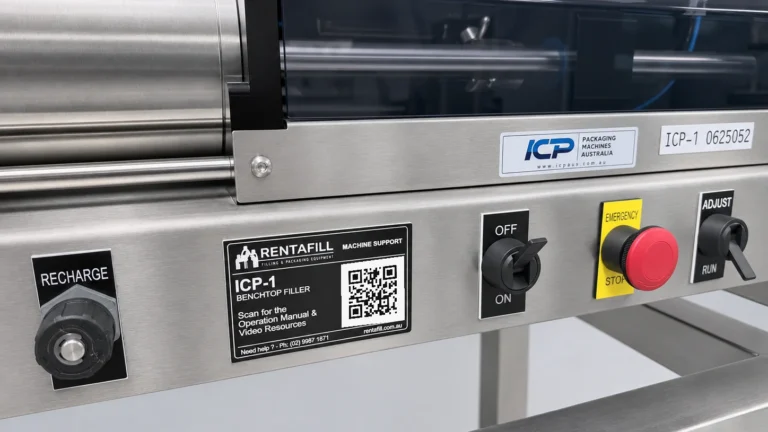
Every Rentafill machine comes with a clear, illustrated manual and a QR code on the machine linking to its support page, with setup and changeover videos and documents. Phone and video support is free for the life of your hire, or for the life of the machine for the original purchaser, and you talk to the people who design and build the machines.
6Serviceability and local parts
More advanced electronics can bring real benefits, but buyers are increasingly asking a harder question: can this machine still be serviced in five years? Imported machines often change design year to year, leaving earlier models with parts that are hard to find.
Standard, off-the-shelf components mean faster repairs, lower parts costs and less downtime.
How ICP machines handle it:
ICP machines are Australian made and built largely from ISO-standard pneumatic and electrical components, so in most cases any local service company can repair them. Common spare parts and consumables are priced in our online store, so you know what ownership costs before you buy.
7Sustainability and longer equipment life
Sustainability is now part of everyday equipment decisions. Accurate filling reduces wasted product, well-built machines last longer and need fewer replacement parts, and right-sized equipment avoids paying to power and maintain more machine than you need.
Hiring also plays a part: one machine serves many businesses over its life, and you only use it for as long as you need it.
How ICP machines handle it:
A machine that survives years of hire to many different customers is built to last in your factory too.
What This Means When You Choose a Filling Machine
The newest feature list isn’t always the best fit. Before you hire or buy, weigh up:
Fit
Does it suit your product, containers and output, or are you paying for more machine than you need?
Changeover
How quickly and repeatably can your team switch products and sizes?
Cleaning
Do the food-contact parts come off easily for proper cleaning and sanitising?
Support & parts
Who helps when you call, and can the machine be serviced locally in five years?
For a full checklist, read 13 questions to ask any packaging machinery supplier.
Frequently Asked Questions
Common questions about choosing liquid filling equipment.
What are the latest trends in liquid filling technology?
The main trends are higher fill accuracy and repeatability, faster changeovers, flexible right-sized equipment, hygienic designs with easily removable food-contact parts, better operator support such as videos and QR-linked manuals, serviceable machines built from standard parts, and a stronger focus on reducing waste.
Do I need a full production line or a benchtop filler?
Often a benchtop filler is enough. Many producers expect to need a full line, but a well-set-up semi-automatic filler can handle far more output than people expect. Rentafill can advise on what your product actually needs.
Can I hire a liquid filling machine to trial a new product?
Yes. All of Rentafill’s new filling machines are also available for hire, so you can trial a machine on your product before committing to a purchase.
Are ICP filling machines easy to clean?
Yes. ICP machines are designed so food-contact parts can be removed and effectively cleaned and sanitised, as required by Food Safety Standard 3.2.3. The machine frame and mechanics are wiped down rather than hosed.
Talk to the People Who Build the Machines
Planning a new product, upgrading an old machine or scaling up? Call us for free, honest advice on the right filling setup for your product. All of our new filling machines are also available for hire, with delivery Australia-wide.
Call 02 9987 1871Contact UsHire EquipmentNew Filling Machines