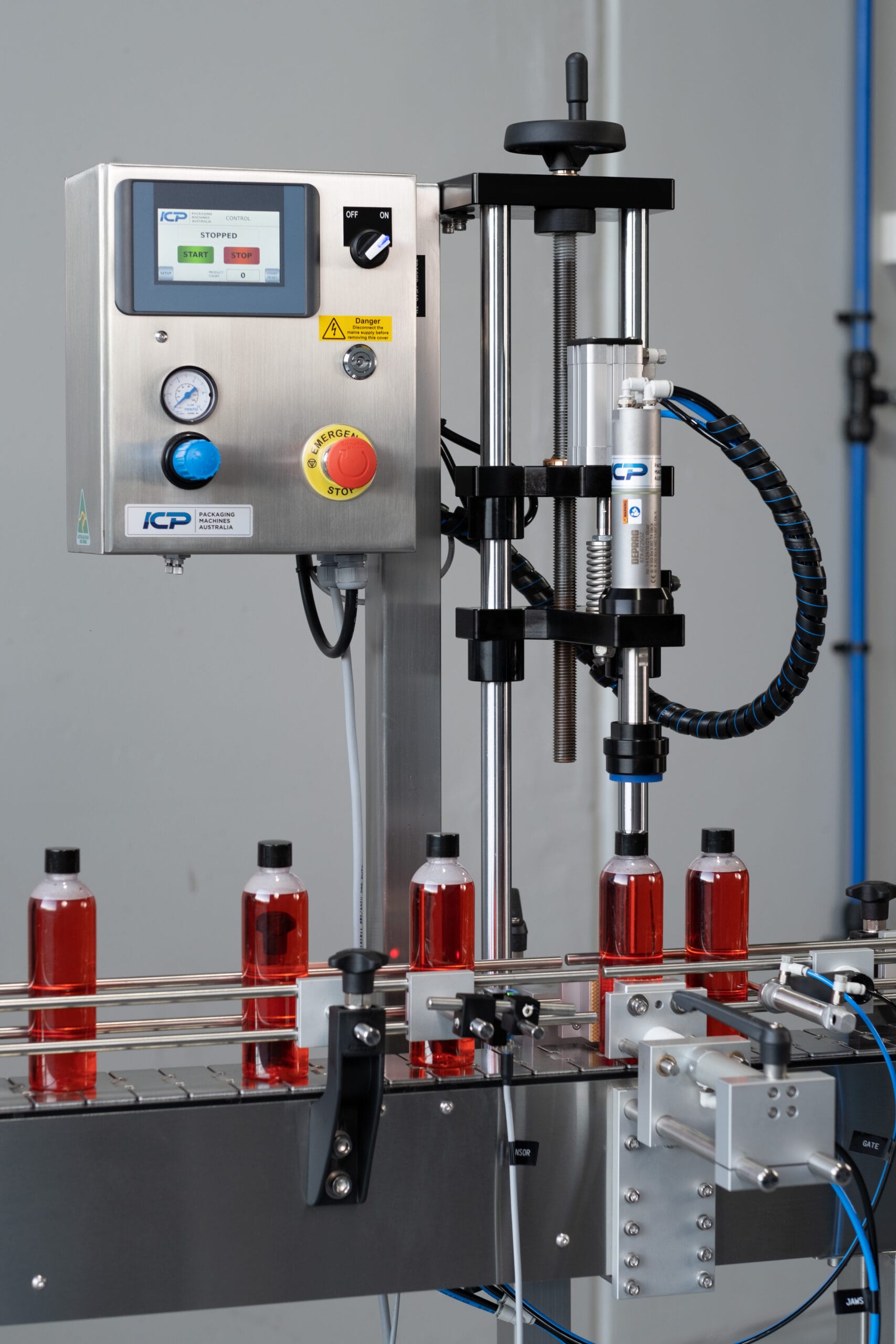



Based on the solid and proven ICP-AC1 range of auto capers, the PLC version is a leap forward in the evolution of what has shown to be already a high-quality caper. PLC version allows for finer tuning of the caper with up to 8 different timer functions. More importantly, the ability to accurately recall previous settings for easy changeover of different containers/caps.
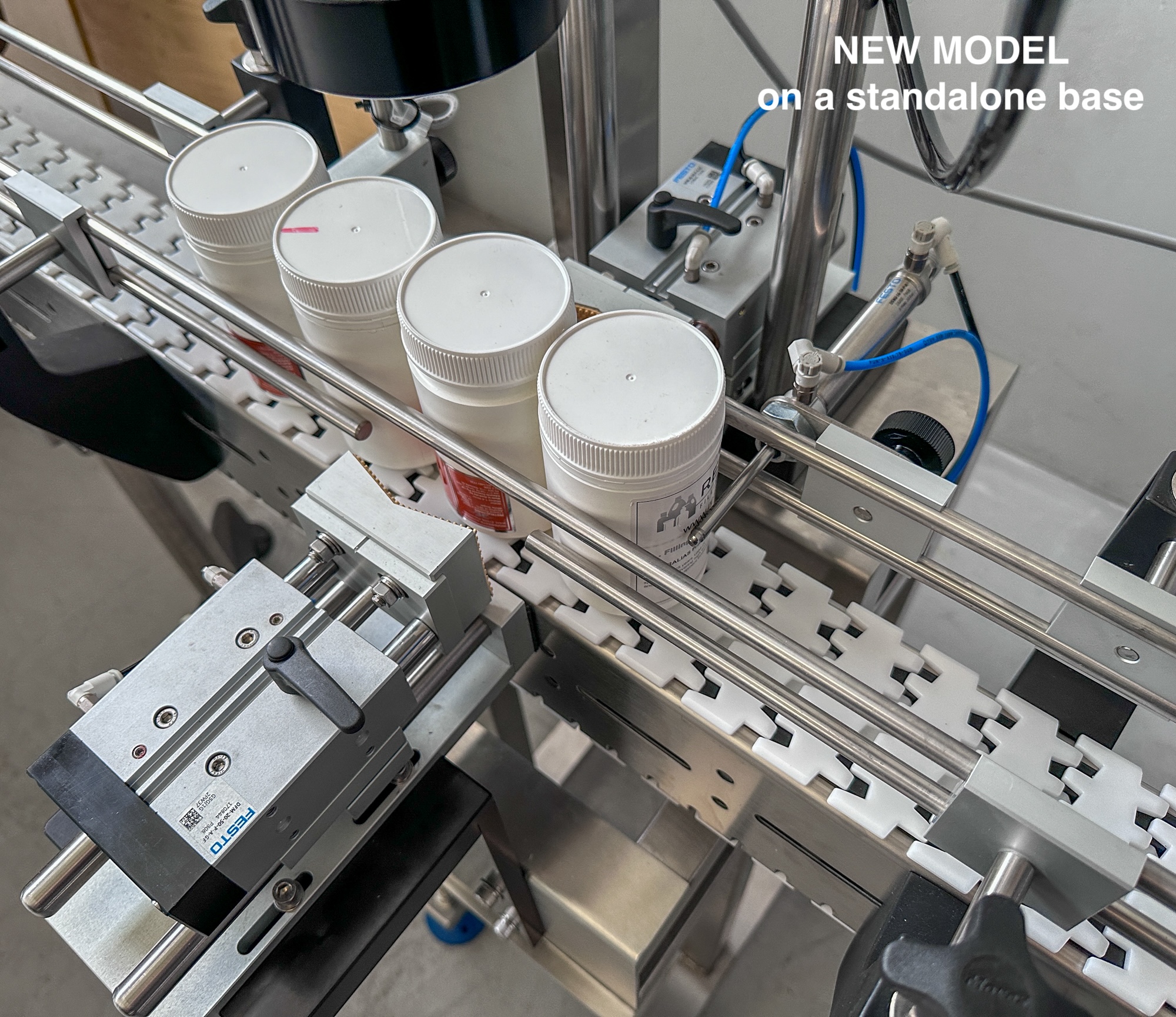
The ICP-AC1 is a PLC driven pneumatic capping machine designed and built in Sydney by ICP Packaging Machines Australia. Designed to mount onto a running conveyor belt, the cap tightener is adjustable for containers from 0 to 450mm tall.
A unique feature of the ICP range of cappers is that, unlike traditional capping machines that only work by a simple single timer (which can result in under or over-tightening), our ICP cappers have air torque motors designed to stall out at a given torque that is infinitely adjustable. The tightening head simultaneously descends onto the bottle.
PLC functions include multiple timer controls for every function on the machine, allowing the user to fine-tune each function. Also, giving the ability to hold a sensor signal or make the jaws steady the container before the air motor descends, and more importantly, the ability to recall the previous setting into the PLC, saving the need to re-calibrate the machine on every change-over.
The new 2026 floating motor design of the ICP-C1 & ICP-AC1 PLC sets a clear benchmark over traditional capping systems. Unlike conventional machines where the chuck shaft is directly coupled to the air motor—placing constant upward pressure and lateral load on the motor bearings—this design fully separates the chuck shaft from the motor. By supporting the chuck shaft independently within precision bearings, the air motor is isolated from mechanical stresses caused by capping forces or minor misalignment of the chuck. This eliminates unwanted side loading and axial pressure on the motor shaft, allowing the motor to operate exactly as intended—under pure rotational load only. The result is significantly more consistent and repeatable torque application, improved cap integrity, and greatly extended motor life. In real-world production, this translates to reduced wear, fewer maintenance issues, and far more reliable performance compared to competitor designs that rely on direct shaft coupling and expose the motor to unnecessary mechanical load.